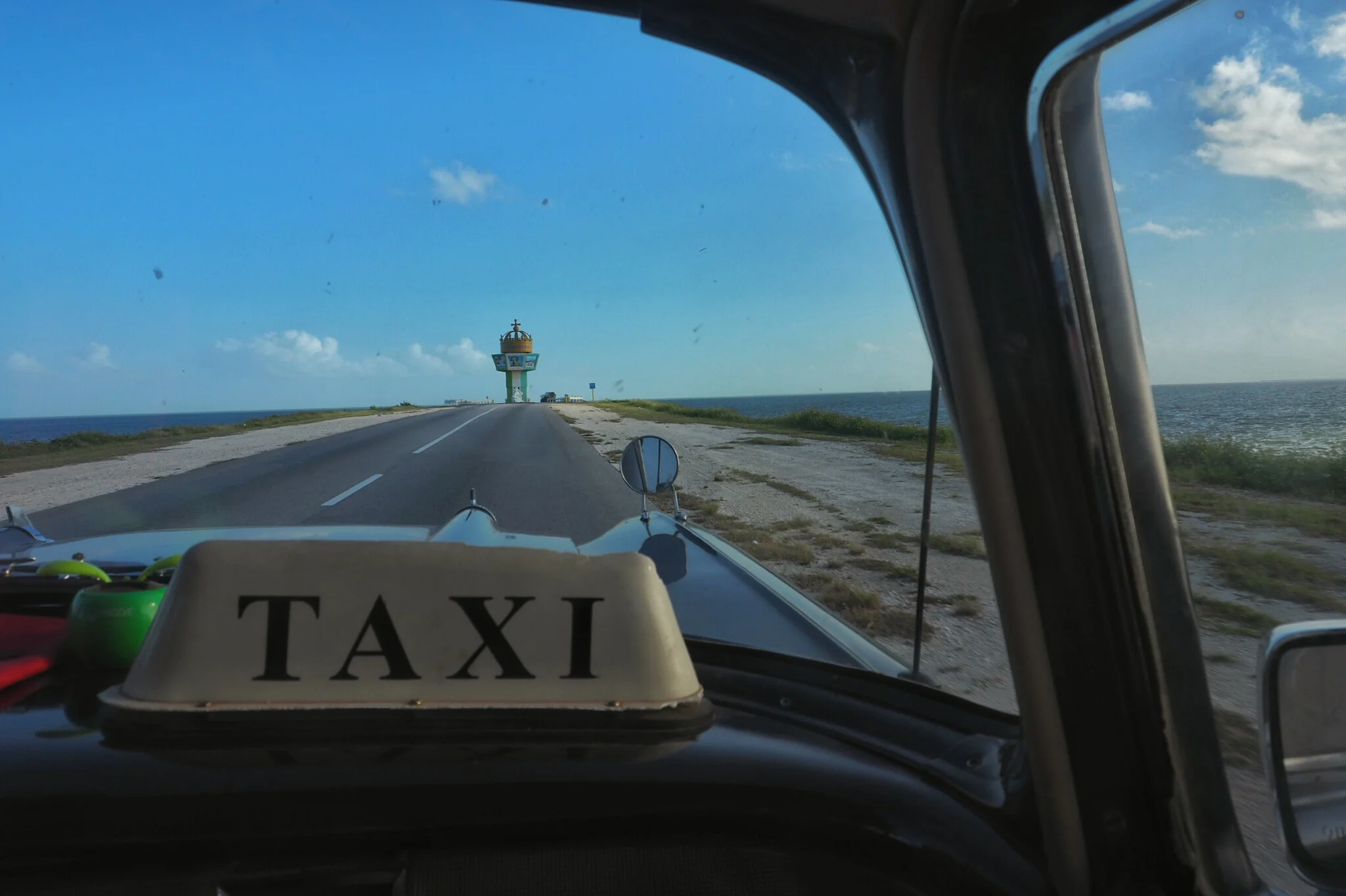
Cabbin' Cuba
You have several options to get around Cuba. Flights, which are usually expensive and only take you from Havana to Santiago. The state-run Viazul buses, which are also relatively pricey and are a chore to book - the online booking tool almost never works, and in person you’ll have to stand in several lines for a couple of hours and possibly bribe the driver to secure a seat in high season. Then there are camionetas, local transport that costs about 2 EUR per 100km. However, they are of course slightly less comfortable since you’ll be squeezed in the back of a truck, and you’ll have to wait for half a day for them to fill up and get going.
If you want to be flexible and see more remote parts of the island, cabs are the way to go. Taxis in Cuba are basically any moving vehicle that someone decides to make some money with. In Europe, most of them would have their home in a museum. For the 260km from Las Tunas to Moron, I share a 1953 Cadillac with seven people - four entangled on on the back seat, three riding in style in the front. We refuel with heating oil, since it’s cheaper than gasoline. Many of the engines on the island, I learn, are fitted to cope with the lack of resources in the country.
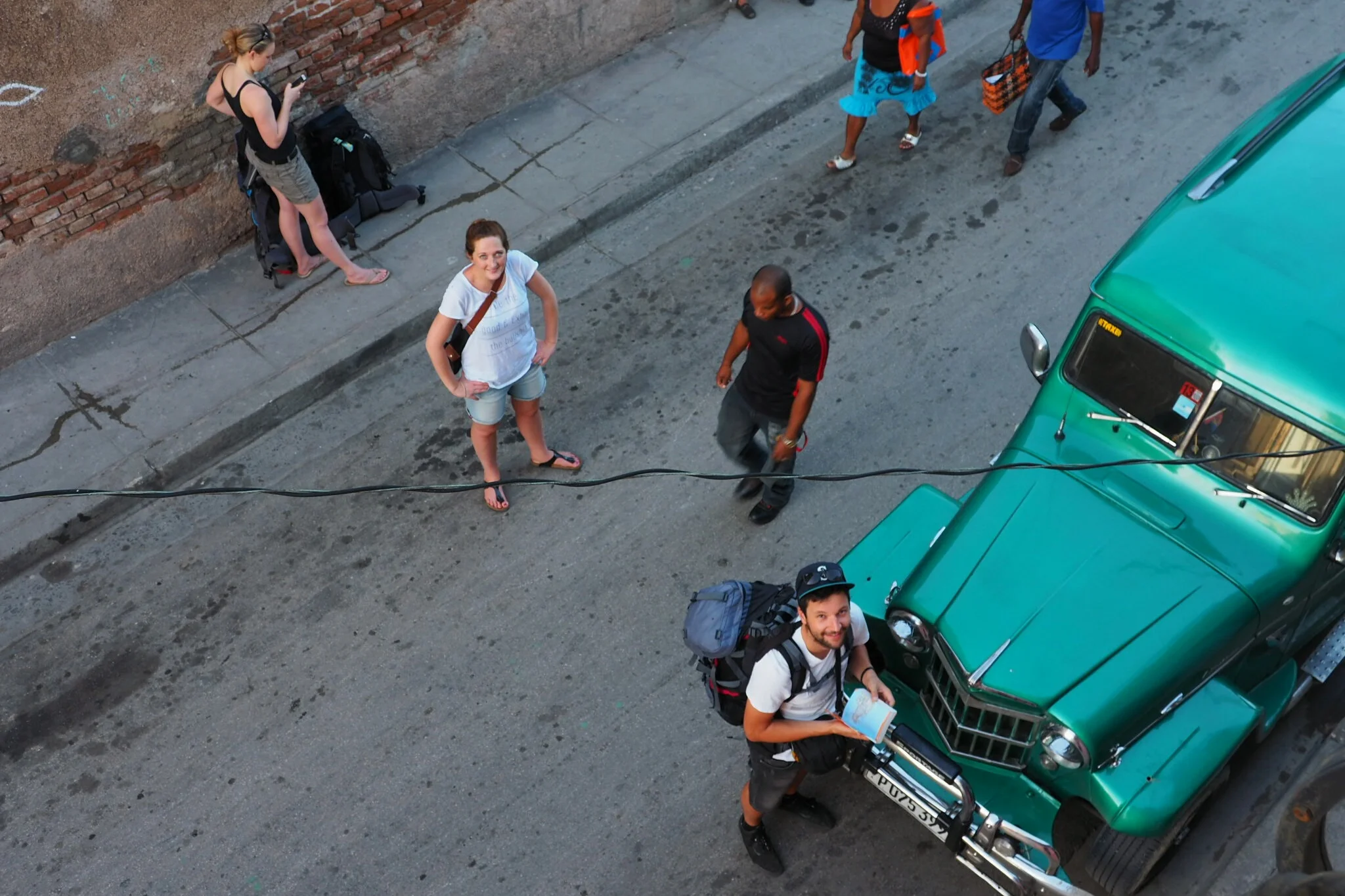
Ready to board the cab for another 12 hour drive.
The most memorable cab ride takes me and two friends from the beaches of Cayo Coco to Havana, 530km at night. The driver, bald and stocky, and shows up at the 11pm in a 1983 Honda. The passenger seat is occupied by a sexy Cuban chica, so the three of us load our luggage in the trunk and squeeze into the back. We stop at the checkpoint that regulates access to the peninsular to make sure that only taxis paying the peninsular premium get to chauffeur tourists. The driver steps out, in hand a big plastic bag containing, by the looks of it, imported cookies. The bag changes hands, accompanied by amicable chatter. Then the boom is lifted, and we drive on. Business as usual.
Next stop, Moron, in front of a shop. The lady gets out, the driver gets out. He shakes hands with a guy parked next to us, and starts unloading out backpacks. “He’ll drive you to Havana,” he instructs us. Glad to share the space with one less passenger, we change into the other car, an almost identical Honda. The new driver, Gustavo, is equally stocky, but less chatty. He hits the road, which is almost empty, with the occasional unlit horse cart driving on the bank and a few other cars coming our way. The doors of our ride are leaky; a cold wind blows through the cracks. I nod off, wrapped in a blanket courtesy of Condor.
In Santa Clara, some time past midnight, we stop in front of a house. Gustavo disappears up a set of stairs. A couple of minutes pass, then he comes back down and introduces us to his “brother”, Frederico. “He’ll drive you to Havana,” he says. Frederico greets us and assures us that he’s been resting for the drive. A couple of minutes later, we’re back on the highway, which is in semi-good shape. In order to not lose the lane, the Frederico hugs the central line and swerves to the right when he’s blinded by the headlights of an approaching car. Everyone drives with undipped headlights. From the back, our driver looks like Nosferatu, bald with weirdly shaped ears. He appears to be constantly blinking his eyes, but other than that I can detect no movement in his body. 230km to go.
Fortunately, Frederico appears alive and well - he stops regularly at highway service stations that lie abandoned in the middle of nowhere, eerily lit like movie sets. Since I can’t sleep, I stretch my legs - the only other vehicle at this stop is a truck piled high with fruit, seemingly abandoned. Hours later, we finally arrive in Havana, just as the city begins to wake from sleep. We get off in old town, hoping to find a place to stay somewhere central. A pale Nosferatu collects his money, bids us farewell, and gets back into the car. I secretly cross myself as I watch him drive off in his rattling Honda, leaving a small cloud of dust behind.
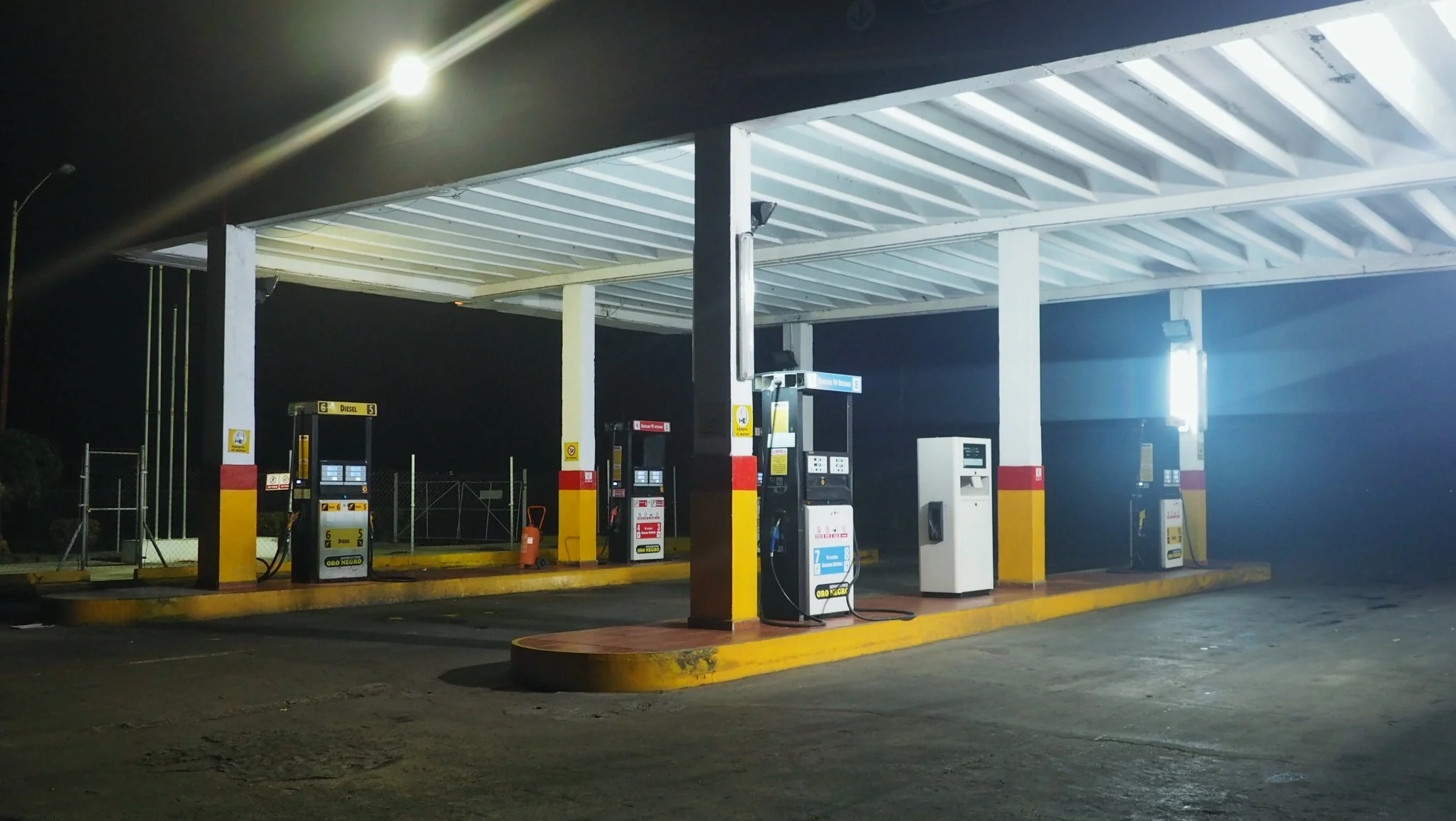
Late night petrol station. There is really not much going on here.